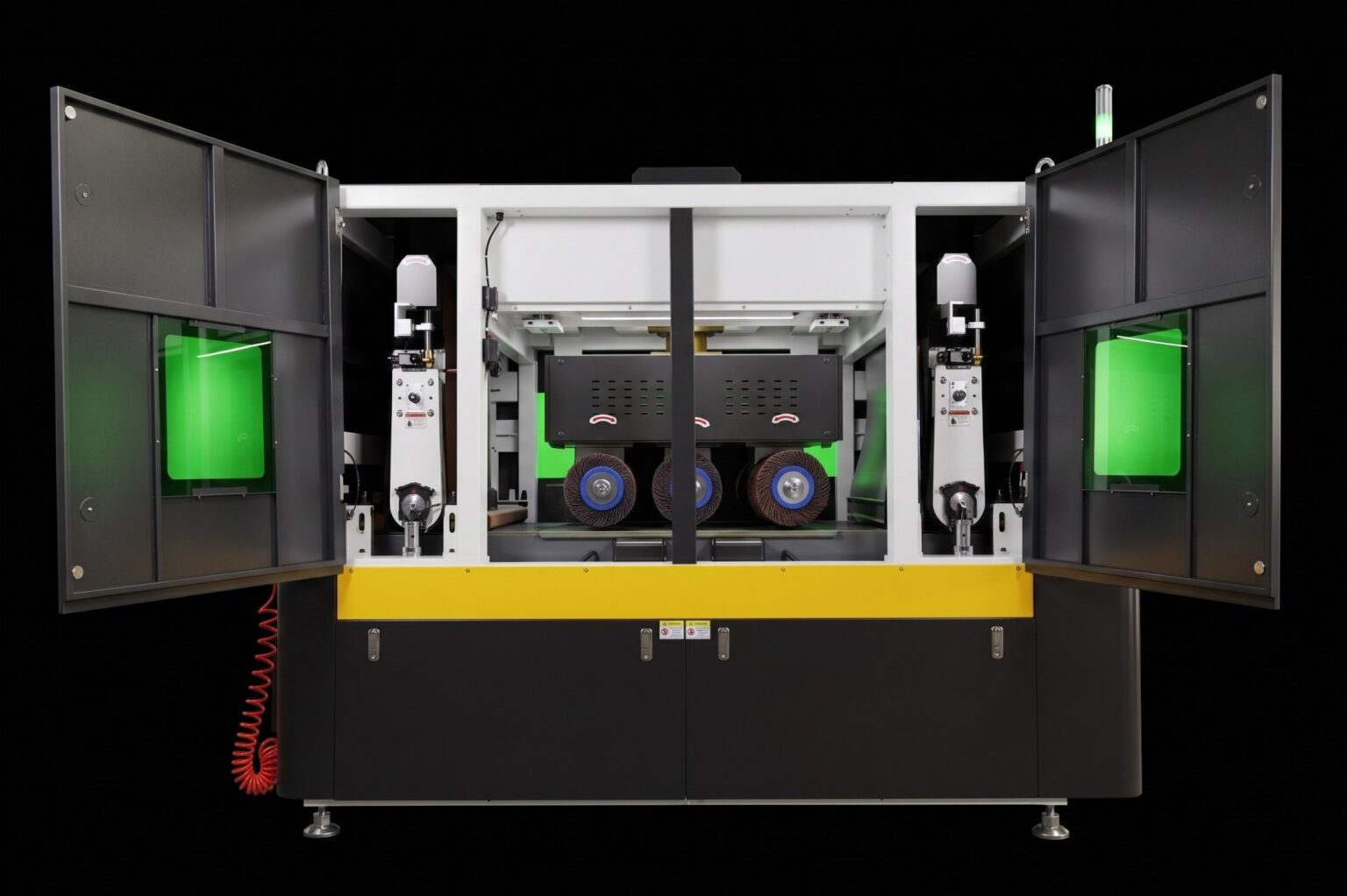
Beginning a thorough analysis of self-operating equipment engineered focused on surface finishing offer transformed engineering operations, granting notable gains on throughput and superiority. Our overview explores the several types of automatic deburring equipment, incorporating abrasive abrading devices, turning machines, and innovative computer-controlled systems. We will cover the benefits of adopting these systems, including diminished workforce expenses, raised item uniformity, and greater workshop performance.
Corner Trimming Solutions: Exact Perfecting Defined
Profile smoothing platforms offer a modern solution for realizing meticulous processing on products. Beyond manual methods, these mechanized fixtures guarantee uniform effects and notably strengthen manufacturing productivity. The machines generally employ different machining appliances like twisting tips, lapping abrasives, or bespoke configurations to extract sharp boundaries and burrs. The procedure is essential in a large array of areas, featuring vehicle and instrumentation.- Advance surface quality
- Reduce production expenses
- Elevate output and performance
Byproduct Disposal Apparatuses: Producing Unblemished, Outstanding Facades
Latest metallurgy operations consistently produce significant amounts of contaminants, a byproduct that, if ignored, can severely degrade the appearance of the end result. Fortunately, advanced scraping systems offer a reliable solution. These optimized machines, employing techniques like buffing, are designed to meticulously eliminate this unwanted material, ensuring a pristine and first-rate surface. The resulting enhancements include minimized rejection rates, better aesthetic appeal, and an overall improvement in workflow efficiency. By utilizing advanced slag removal technology, manufacturers can consistently deliver premium surfaces and achieve stringent norms.
Sheet Metal Polishing: The Benefits of Deburring Devices
Achieving a first-rate appearance on sheet metal parts is imperative for durability, and deburring units present major gains over traditional methods. Abating burrs rapidly not only enhances the surface quality of the item, but also blocks likely complications during construction and handling. Additionally, intelligent deburring procedures advance fabrication currents and cut operator outlays.
Advancing Sheet Metal Production with Automatic Deburring
In order to strengthen productivity in sheet metal processing, explore self-operating deburring methods. Conventional deburring is ordinarily labor-intensive and inclined to aberrations. Implementing intelligent deburring offers major positives, such as decreased employee charges, better item consistency, Brushing Solutions and amplified production rates. These commitments can substantially repay themselves.Opting for the Perfect Deburring System for Your Operation
Selecting the best deburring system for your individual needs necessitates a precise assessment of several factors. To begin with, review the classification of element you're operating on – aluminum requires varying techniques than fiberglass. Subsequently, review the extent and structure of the segments needing deburring. Ultimately, analyze your processing quantity; a heavy-duty operation calls for a separate type of device than a minimal one. Disregarding to deal with these criteria can lead to suboptimal results and higher expenses.
Deburring Unit Method: Evolutions and Revolutions
Latest burr elimination tool procedure is encountering rapid advancement, prompted by the required for higher precision and output in activities methods. Noteworthy movements highlight the adoption of mechanized frameworks for scalable surface refining functions, alongside advances in lapping system. We're additionally observing a acceleration in transportable edge finishing units catering for focused functions, and new processes like thermal burr trimming are gaining support. The vision points towards expanded networking of edge-removal tools within the intelligent factory context.
Boosting Customized Unit Quality with Perimeter Shaping
Many constructing processes for iron parts introduce sharp edges, which can bring about stress spots and weaknesses that impair overall durability. Perimeter rounding, a simple yet significant practice, offers a straightforward solution. It requires slightly polishing the pointed edges of a module during the machining stage. This lessens stress areas, amplifies wear durability, and can prevent splitting. Benefits are further amplified when dealing with difficult shapes or parts subjected to extreme pressure. Considerations include the best radius of the bevel and its implication on integration with other units.
- Mitigates Stress Areas
- Elevates Fatigue Lifespan
- Blocks Cracking
Dross Disposal vs. Edge : Comprehending the Contrasts
Albeit many engineers use the expressions “slag separation” and “deburring” interchangeably, they describe distinct techniques in metal industrial processes. Deburring focuses on cutting away the sharp, often tiny, burrs created during shaping operations—these are excess fragments of fabricate left on the module. Slag clearing, conversely, addresses such leftover – typically a amalgam of chemicals – that forms during processes like casting. Essentially, deburring deals with excess borders, while slag processing deals with those remnant of a diverse function. Concluding, robotic deburring and dross removal devices are necessary components of modern metal workshop that secure top-notch finished products with decreased defects and boosted efficiency.Ending the study points out the significant role of leading automated deburring technologies in upgrading assembly specifications and empowering businesses secure advanced productivity and precision.