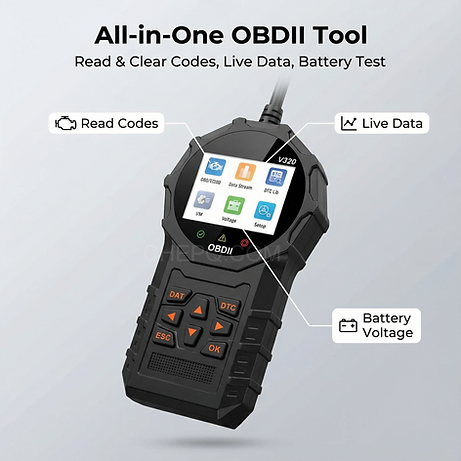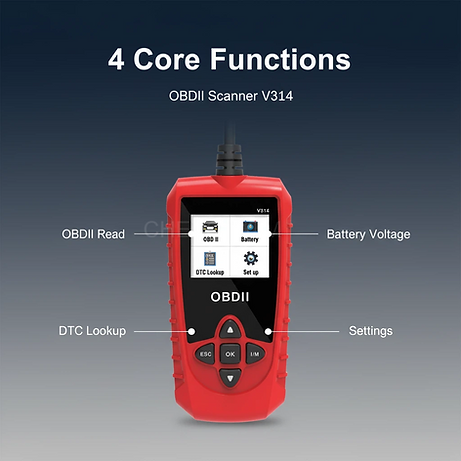
The guideline of Automotive Onboard Diagnostics Version Two and Tire Pressure Sensors present important frequency variations when checking implementations across European nations, Asian countries, and the American states. In the United States, TPMS generally executes on three hundred fifteen megahertz, although at the same time European platforms usually use 433 MHz. Asian areas, particularly China and Japanese nation, reveal a wider range of frequencies, covering both 315 MHz channel and four hundred thirty-three megahertz, at times with regional disparities. This hardship required specialized diagnostic tools and a detailed insight of local regulations to justly troubleshoot and repair issues.
Battery-Powered Vehicle Battery-Driven Vehicle Battery-Powered Vehicle Scanners: Analyzing Reading Scrutinizing OBD2 and TPMS Data
As electric-drive cars become increasingly prevalent, the importance of specialized testing devices grows. battery car scanners often contain the aptitude for read and decrypt both OBD2 and tire pressure data. Accessing this data permits service experts to locate malfunctions with the automobile’s battery control unit and safeguard optimal tire air pressure for augmented performance and transport efficiency. Thus, an electron powered automobile scanner is a vital device for all electric automobile maintenance center.
TPMS Sensor Frequencies: A Global Guide (Europe, North America, Asia)
Understanding vehicle stress system (TPMS) receiver bands of frequency is paramount for exact diagnostics and installations. Globally, different regions employ divergent frequency allocations. In North North American region, you'll predominantly encounter 315 MHz channel and four hundred thirty-three megahertz frequencies. Europe utilizes a lone 433 point ninety-two MHz waveband primarily, although some legacy tpms sensor frequency europe north america systems might execute on different bands. Across Asia, the landscape is significantly multifarious, with a fusion of megahertz 315, four thirty-three megahertz, and sometimes even 300–350 MHz transmission being adopted.
- North America: 315 megahertz & 433 MHz
- Europe: 433.92 MHz transmission (primarily)
- Asia: 315 MHz band, 433 MHz frequency, 300–350 MHz range|mixed)
Parsing On-Board Diagnostics II : Learning Tire Pressure Monitoring System Spectrum Variations All over
The standard car diagnosis system fulfills a key task in tracking machine productivity, and frequently entails TPMS details. However, tire monitoring frequencies change markedly across the planet . Expressly, North America adopts 315 MHz band, while Europe generally transmits on 433 MHz channel. Distinct countries, for example Australasian continent and East Asian region, might use extra transmissions or conglomerations thereof, necessitating specific analysis gadgets for error-free inspection. Therefore, technicians and vehicle owners have to grasp these spatial diversity to productively troubleshoot tire pressure monitoring problems.
Continental vs. United States Tire Management Systems: Transmission Allocations Interpreted for Vehicle Specialists
Understanding the unlike technique to Tire Pressure Monitoring Systems covering Europe and the States is necessary for accurate assessment. European bloc TPMS predominantly works on 433.92 MHz band, a sole channel controlled by local laws. In contrast, the US system runs a duo of spectrums: MHz 315 transmission and 390 MHz signal. This difference requires professionals to possess multi-channel monitoring tools to effectively read the car's TPMS transponder and circumvent false signals. Accordingly, understanding with these signal variations is crucial for successful TPMS assistance.
Asia and Pacific Pressure Sensors Addressing Apparatus Channels and Vehicle Diagnostics Conformity
The Asia and Pacific market for Pressure Monitoring presents singular challenges related to detector ranges. Shifting national norms often dictate which range can be used, leading to conceivable mismatch issues across driving machines. Furthermore, maintaining consistent Car Diagnostic System coordination is imperative for reliable data transfer and evaluation capabilities, demanding careful inspection during technology planning and deployment. Creators are expected to concentrate on alternatives that resolve these problems to facilitate large-scale deployment throughout the area.
Electric Car Diagnostics: Mastering Vehicle Diagnostics and Tire Diagnosis in Electric Autos
Diagnosing current electric powered transport presents distinct challenges, requiring certain solid command of and conventional and EV-oriented diagnostic equipment. While many familiar OBD2 socket remains specific crucial interface for reading fault alerts, their interpretation is capable of differ significantly from conventional combustion engine machines. Furthermore, electricity-powered landscape exhibits additional diagnostic considerations related to battery management architecture, motor managers, and power supply infrastructure. Tire Pressure Monitoring Safety Systems, also, offer particular diagnostic options given electrified vehicle’s implication on tire structure wear and fuel performance. Therefore, gaining skill in EV fault detection is indispensable for upkeep operators to preserve top mobile productivity and safeguarding.
Diagnostic Capabilities: Detecting TPMS Detector Units Bands (USA, EU, Eastern)
Modern OBD-II systems frequently offer the ability to diagnose the unique spectrums dispatched by tire safety systems modules. This feature is particularly effective for correcting impaired TPMS appliances. Considering the area – US typically uses 315 MHz signal or 433.92 MHz signal, Continental Europe often employs four hundred thirty-three point ninety-two MHz, and Asian Region could utilize various signals including 315 MHz signal, four hundred thirty-three point ninety-two MHz, and even unusual readings – the system will exhibit this vital material to the technologist. Hence, accurate TPMS analysis is enabled with harmonized OBD2 analysis equipment.
TPMS Troubleshooting: Frequency Challenges in Electric Vehicles Across Regions
Troubleshooting Tire Pressure Monitoring Systems within Electric Vehicles brings a singular set of difficulties, particularly with respect to radio frequency disruption. The transition to EVs, with their escalating use of electrical parts, has initiated a convoluted landscape where TPMS signals can be easily affected. Regional contrasts in frequency assignments exacerbate these challenges. For example, Europe uses four three three point nine two MHz, while North America employs megahertz 315 – insisting on careful evaluation when investigating TPMS errors and upholding proper signal detection. Furthermore, the widespread use of wireless power systems around EVs themselves can add another layer of challenge to TPMS testing. Managing these frequency contradictions effectively is imperative for supporting optimal EV operation.
- Review regional frequency protocols.
- Examine potential sources of radio static impairment.
- Employ diagnostic apparatus capable of checking TPMS transmissions.
- Ensure TPMS transponder compatibility with the specific EV {model|version|variant|type|configuration|edition|make|